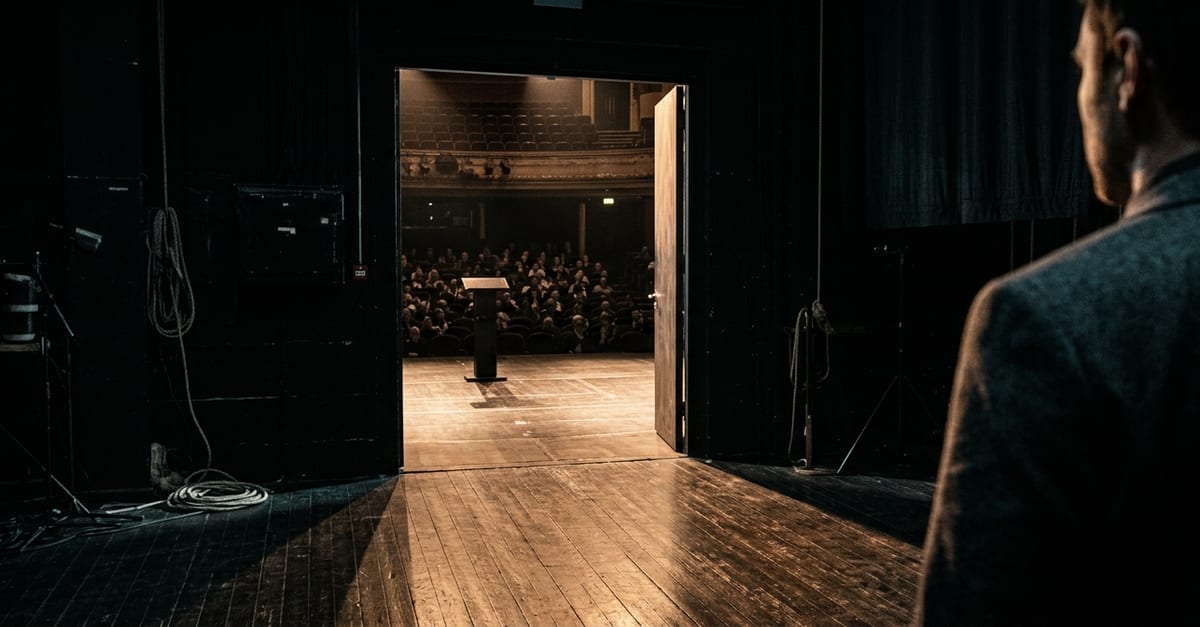
Cold hands, a racing heart, and maybe enough of a shake in your voice or your hands that it feels like everyone can see it. Standard advice says calm down. I’d like to offer better advice: don’t.
Those symptoms are your body doing what it should before something that matters: raising energy, sharpening focus, getting you ready to perform. Nerves and excitement are close to the same physical state, both of them high arousal, and what separates them is the meaning you attach to it. Tell yourself “I’m anxious, something is wrong,” and the feelings become an enemy you fight all through the pitch. Tell yourself “this is my body showing up for me,” and the same energy becomes usable.
This is not only a coaching idea. Alison Wood Brooks at Harvard found that roughly 91% of people believe calming down is the best thing to do before performing, and then found the opposite worked better: people who told themselves “I am excited” outperformed people who told themselves to be calm (Journal of Experimental Psychology: General, 2014).
That reframe is a real, practicable skill, and it’s the first thing I work on with people who dread pitching. But it works best sitting on top of preparation that starts well before the day.
How to calm nerves before a pitch
Don’t fight the nerves; reframe them. Nerves and excitement are close to the same physical state, so treat the energy as your body getting ready to perform. Then prepare in three stages: the week before, rehearse aloud with a live listener asking real questions; the hour before, slow your breathing with longer exhales; the minute before, know your first sentence word for word.
The week before: rehearse aloud, with someone watching
Reading your slides silently is not rehearsal. Say the pitch out loud, standing, at full volume, until the opening two minutes come out the same every time. Then add a live listener who makes you at least slightly nervous, pressing you with real questions in real time – the step most founders skip. Rehearsal without stakes prepares you for a pitch without stakes, and there’s no such thing.
The question-and-answer part of a pitch, the part many people fear most, is also the most trainable. Write down the ten questions you’d least like to be asked. Draft honest answers. Rehearse saying them too. Feared questions with rehearsed answers stop being threats and start being invitations.
The hour before: work the body, not the mind
By now the thinking is done; more mental rehearsal just burns energy. Work the one thing that directly settles your nervous system: breathing, with the exhale longer than the inhale. Four counts in, six or more out, for a few minutes. This isn’t a relaxation ritual – it’s a physiological signal that dials arousal down from flooded to focused. Walk if you can. Skip the extra coffee.
The minute before: one sentence
Know, word for word, the first sentence you’ll say. Not the first slide, the first sentence. Nerves are worst at the threshold. A memorized opening carries you across it, and momentum does the rest. And when the hard question comes mid-pitch, remember that a pause is not a failure. Breathe once, then answer. The listener hears that pause as composure, because that’s what it is.
Performance nerves that spike before big moments and settle afterwards are normal and workable, and everything above will help. Anxiety that’s present most days, pitch or no pitch, is a different matter; coaching is not a replacement for therapy, and a good coach will say so to your face. If you’re unsure which one you’re carrying, that’s worth a conversation with a professional either way.
The founders who pitch well still feel nervous; they’ve trained with the feeling until it became usable energy.
If a pitch is coming, book a free intro call. We’ll take the ten questions you fear and rehearse the answers live.